

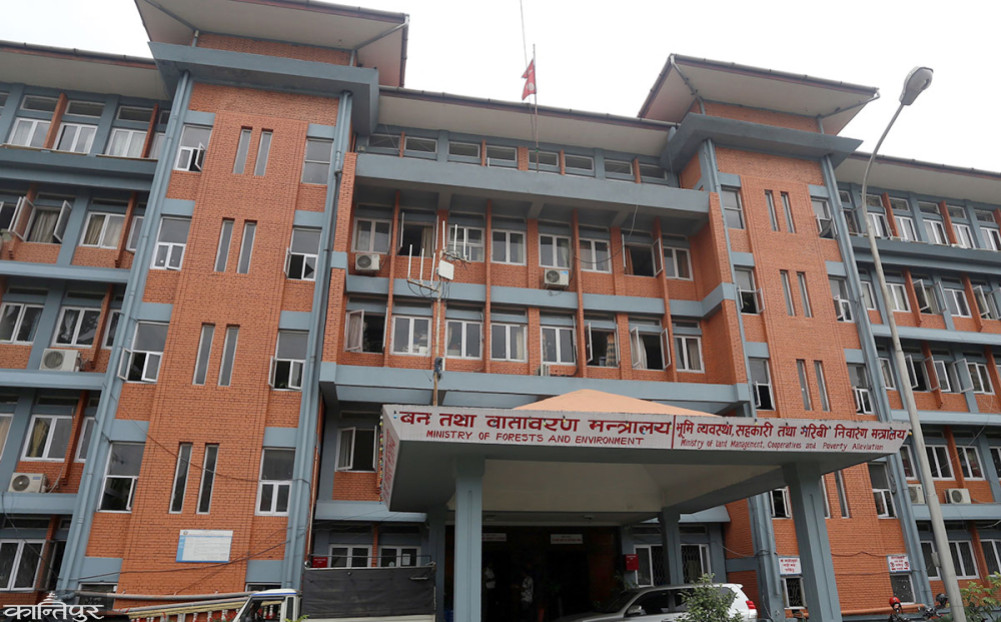
Kathmandu — The Ministry of Forests has declared the red monkey and wild boar as agricultural harmful wildlife for one year. With this declaration, farmers will no longer face legal action if these animals are chased away or killed while in their fields.
Previously, on 7th Mangsir, 2080, the ministry had already declared wild boars as agricultural harmful wildlife for one year. The declaration for both the red monkey and wild boar took effect from 10th Magh. According to Ramchandra Kandel, the Director-General of the Department of National Parks and Wildlife Conservation, these animals were declared harmful due to the damage they cause to crops. He said, “If the red monkey or wild boar dies while being chased from the fields, farmers will no longer face legal consequences.”
Five Conditions for Managing Monkeys and Wild Boars
- If the red monkey or wild boar causes damage to crops or property, farmers may chase, capture, or kill them, either individually or collectively. Any captured monkeys or wild boars must be handed over to the nearest office of the National Park, Wildlife Reserve, Hunting Reserve, Conservation Area, or any sub-office under those bodies.
- The local ward office must be informed before or after chasing, capturing, or killing the monkey or wild boar. When a monkey or wild boar is killed, a report must be made in the presence of at least five local people, including one representative from the ward, and a record should be created.
- The body of the dead animals must be reported to the relevant office every two months. If the dead wild boar’s weight is taken into account, the value is calculated and deposited as revenue, which can be used for non-commercial purposes within the concerned local ward.
- The monkey or wild boar cannot be chased, captured, or killed inside the National Wildlife Reserve, Hunting Reserve, Conservation Area, or National Forest Area.
This decision follows persistent requests from the Ministry of Agriculture and Livestock Development, farmer representatives, and other stakeholders who warned of the potential food crisis. The ministry had set up a technical team for study, whose report led to the agreement to declare the animals as harmful wildlife.
The Ministry's Secretary, Deepak Kumar Kharal, confirmed that this measure will give farmers relief. He said, “Now, if these wildlife enter your field, they can be chased or captured without fear of legal repercussions.”
This move has been made possible under Rule 36 of the National Parks and Wildlife Conservation Regulations, which allows the Ministry to declare certain animals as harmful to agriculture in specific areas and times. If any issues arise during the year, a reevaluation of the declaration will be done.
While this decision is welcomed by many, some experts have raised concerns. Mahesh Chalisey, a monkey expert, explained that red monkeys, also known as Hazarai or Red Tailed Monkeys, travel in large groups and cause extensive damage to crops. He believes that this measure might be aimed at controlling their population and damage. However, he also pointed out that while these monkeys cannot be caught under international law, they could potentially be used in research for medicinal purposes, which could generate significant revenue for the government.
Conclusion The declaration of the red monkey and wild boar as agricultural harmful wildlife is expected to ease the burden on farmers, allowing them to protect their crops without fear of legal consequences. However, the issue of compensation for damages and alternative income generation remains unresolved for many farmers.
Published in Kantipur